What Makes Tape Truly Waterproof: Butyl & Rubberized Adhesive Explained
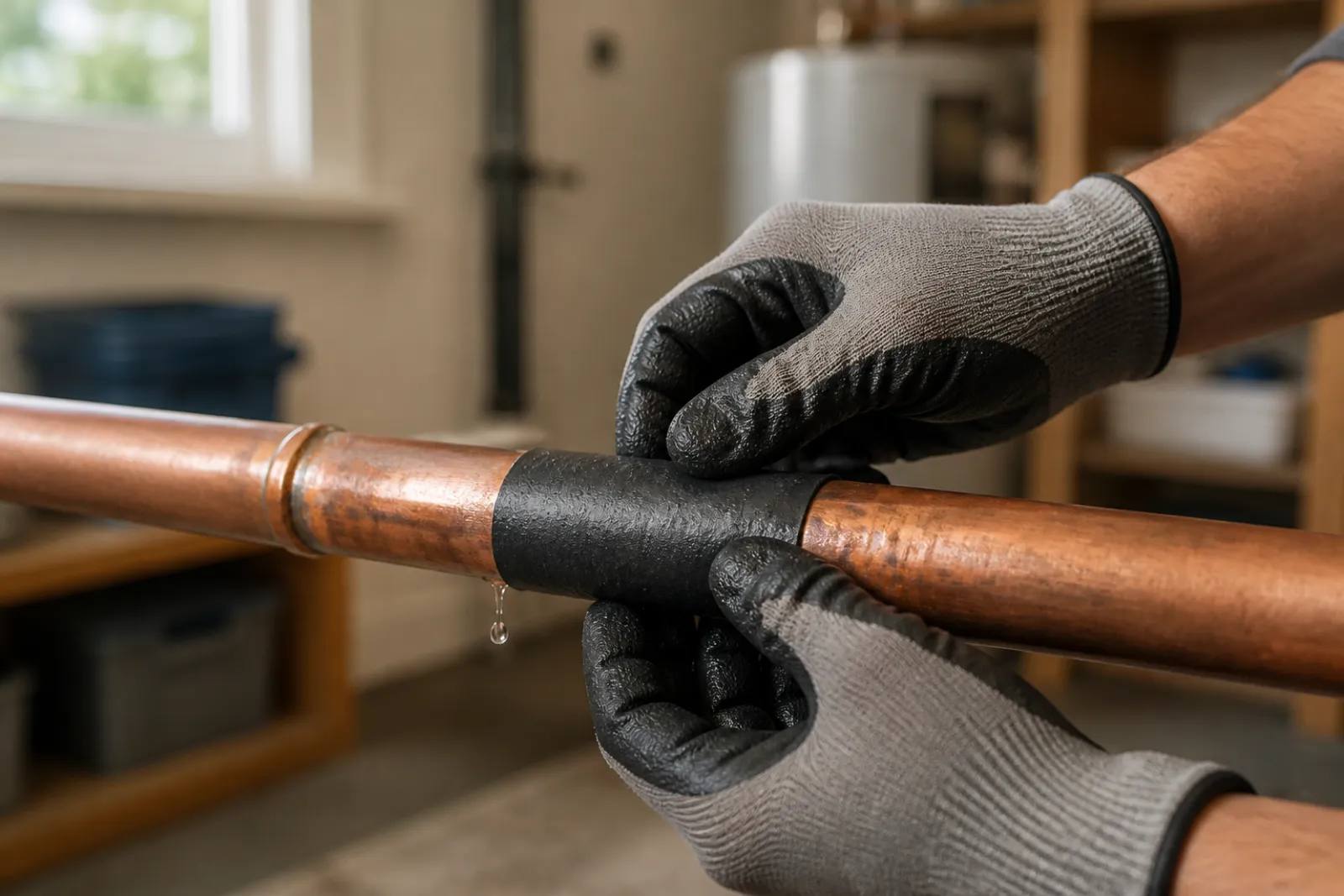
Yes, it genuinely works, and the reason is chemistry rather than marketing. A roll earns the label when two parts do their jobs: a non-porous backing water can't pass through, and an adhesive thick and permanently tacky enough to push moisture aside instead of loosening in it. Get one half right and the other wrong, and you have a fix that looks fine for a week, then weeps at the edges after the next hard rain.
Butyl Adhesive vs Rubberized Backing
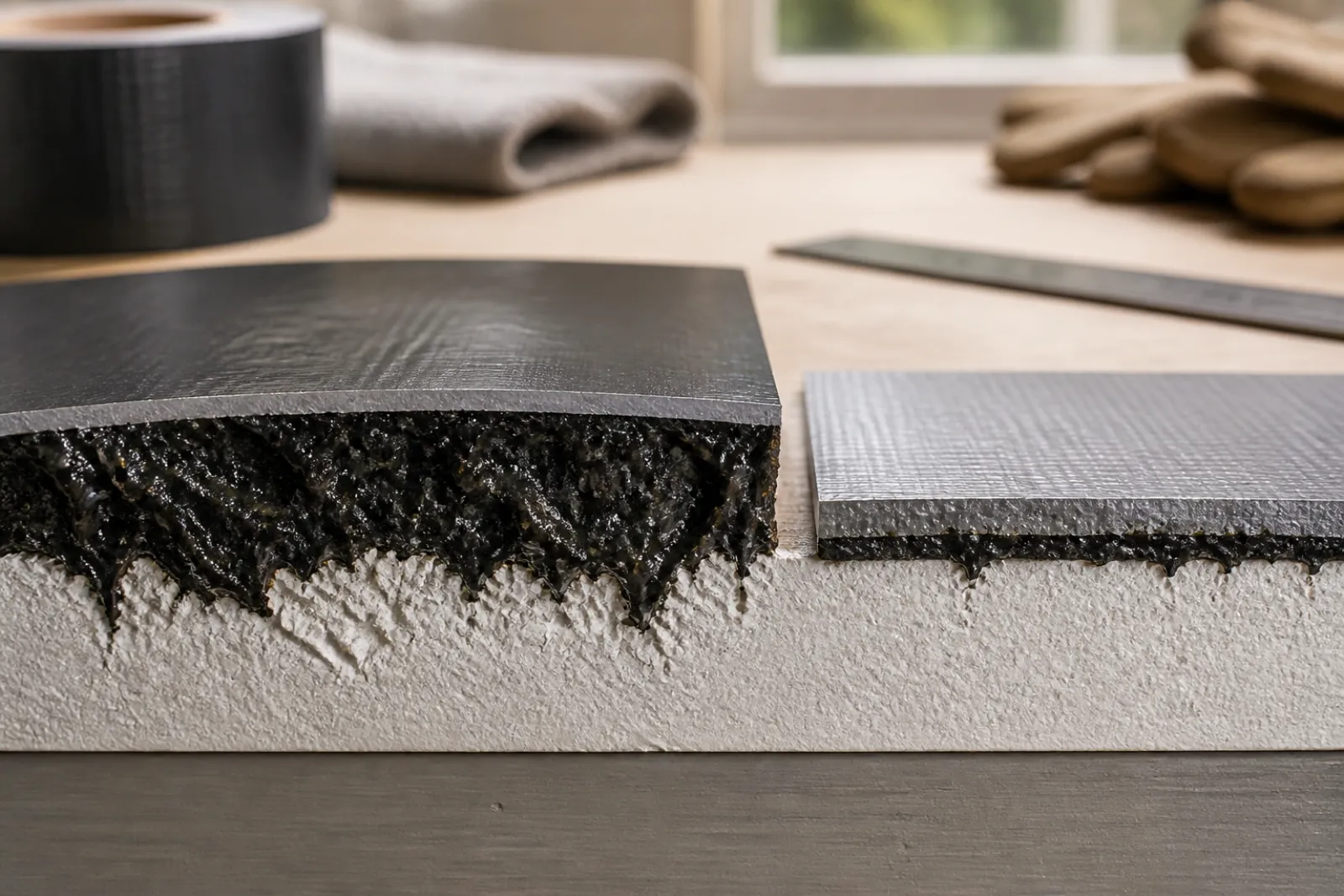
Butyl is a synthetic rubber that never fully cures. It stays soft, slightly gummy, and it flows — slowly — into every scratch and pit beneath it. That's why butyl adhesive does the sealing work on anything sold as a serious repair tape, and why T-Rex says its heaviest roll grabs on initial contact even below the waterline.
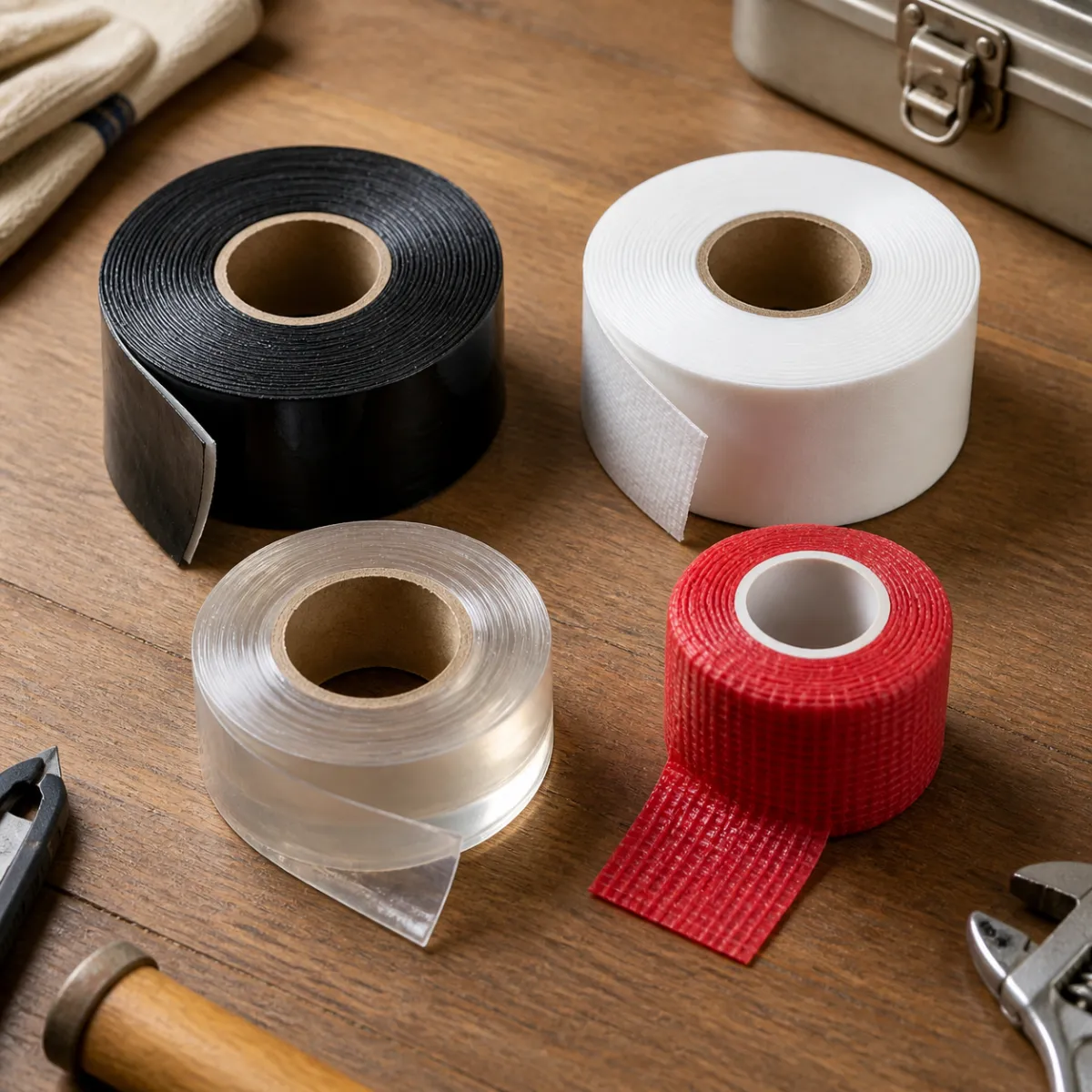
The backing is the flexible skin that carries the glue, blocks water from above and takes the beating from sun and grit. Rubberized backings stretch and conform around a curve; stiffer laminated ones hold a harder shell across a wide gap. Both are pressure-sensitive adhesive systems — they stick under hand or roller pressure alone. No heat, no primer, no cure time.
Watertight Seal & Bond Strength
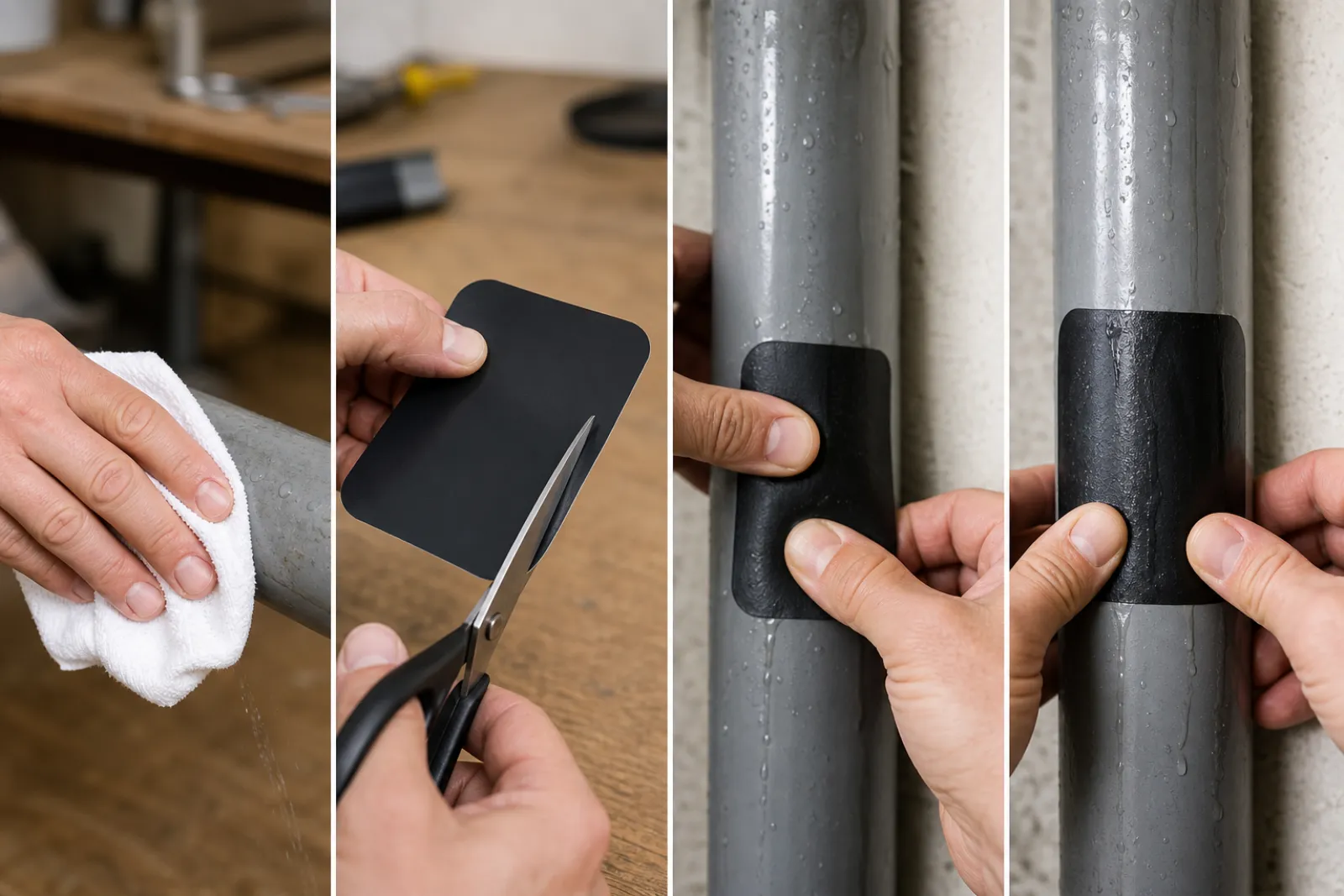
Pressure is the variable people skip, and it decides whether you get a watertight seal. Adhesion isn't instant at full strength; the glue needs a minute of firm contact to wet out into the texture underneath. Press from the middle outward so air escapes ahead of the strip rather than getting trapped.
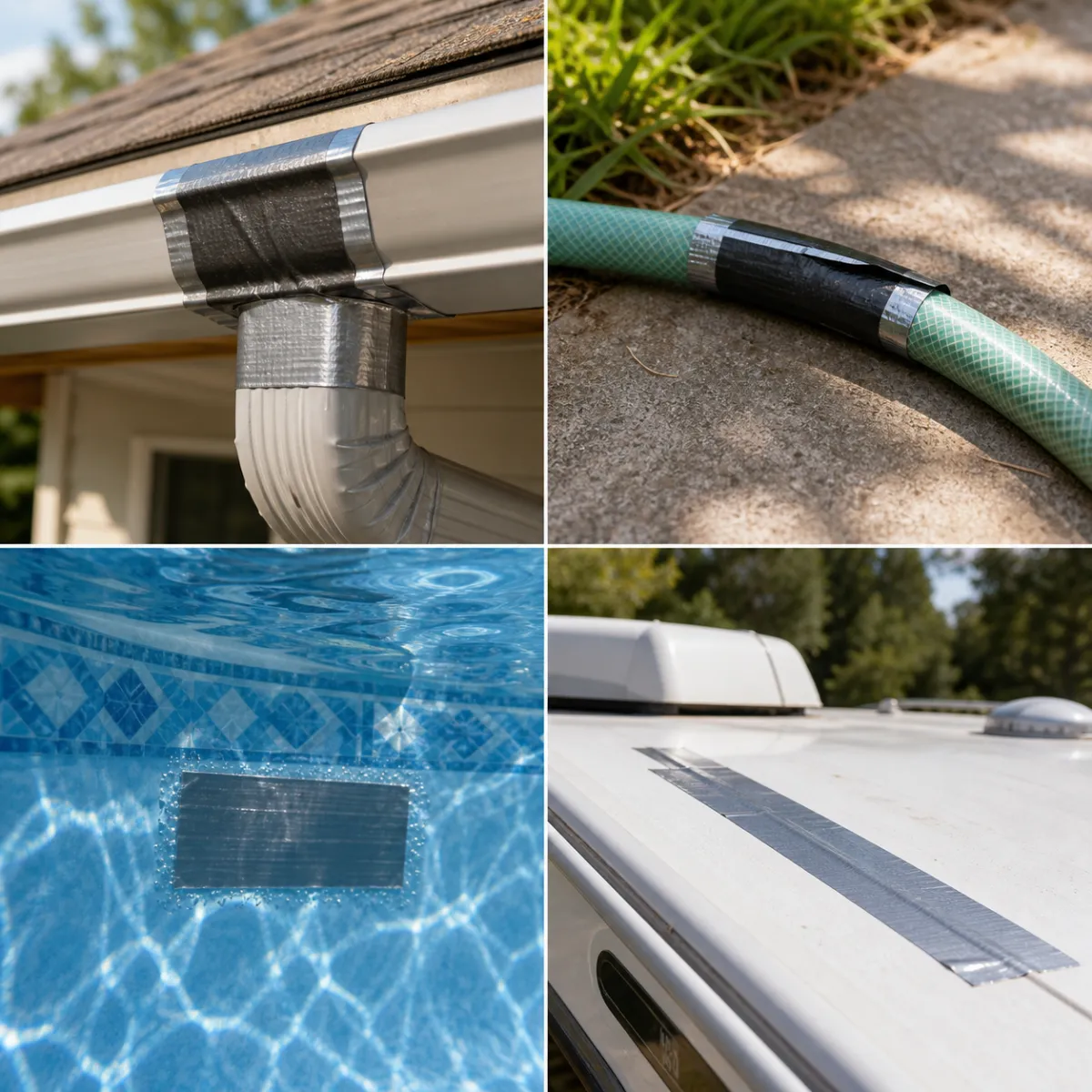
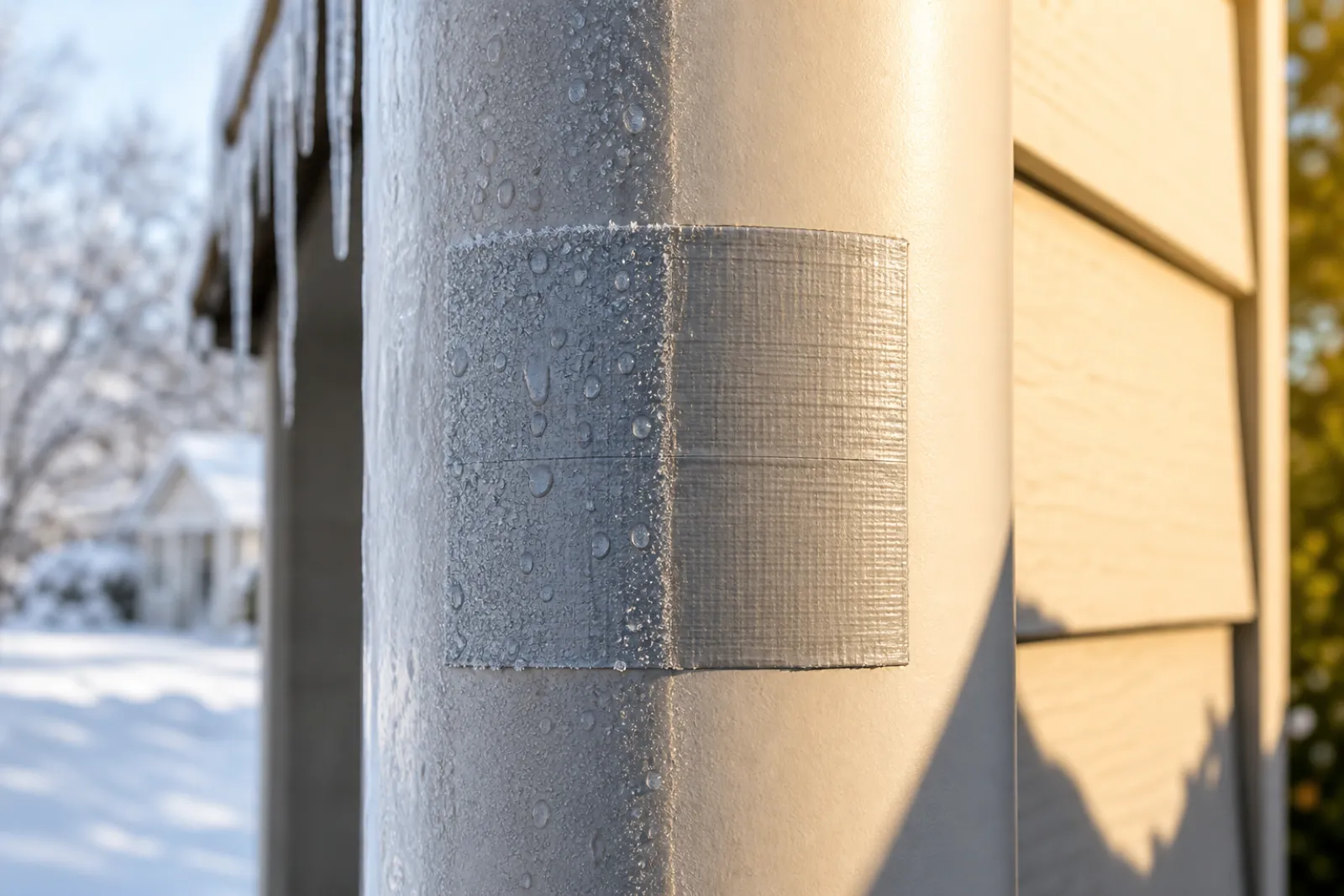
What you're sticking to matters too. Smooth, non-porous material — copper, PVC, painted steel, glass, rigid plastics — gives the best bond. Weathered shingle and rough concrete are harder, because the glue must bridge a texture instead of sinking into it.
Why Duct Tape Fails Where Waterproof Tape Succeeds
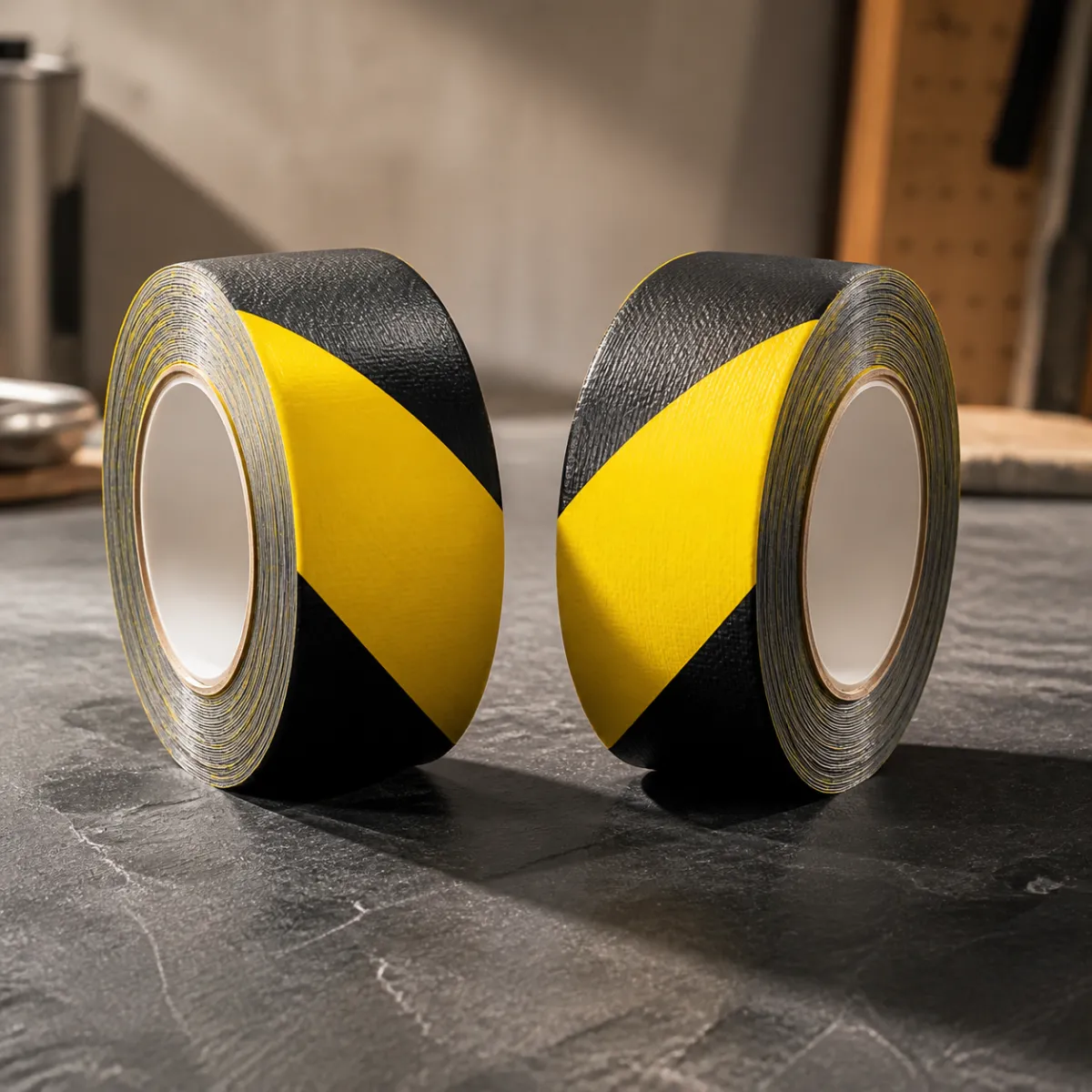
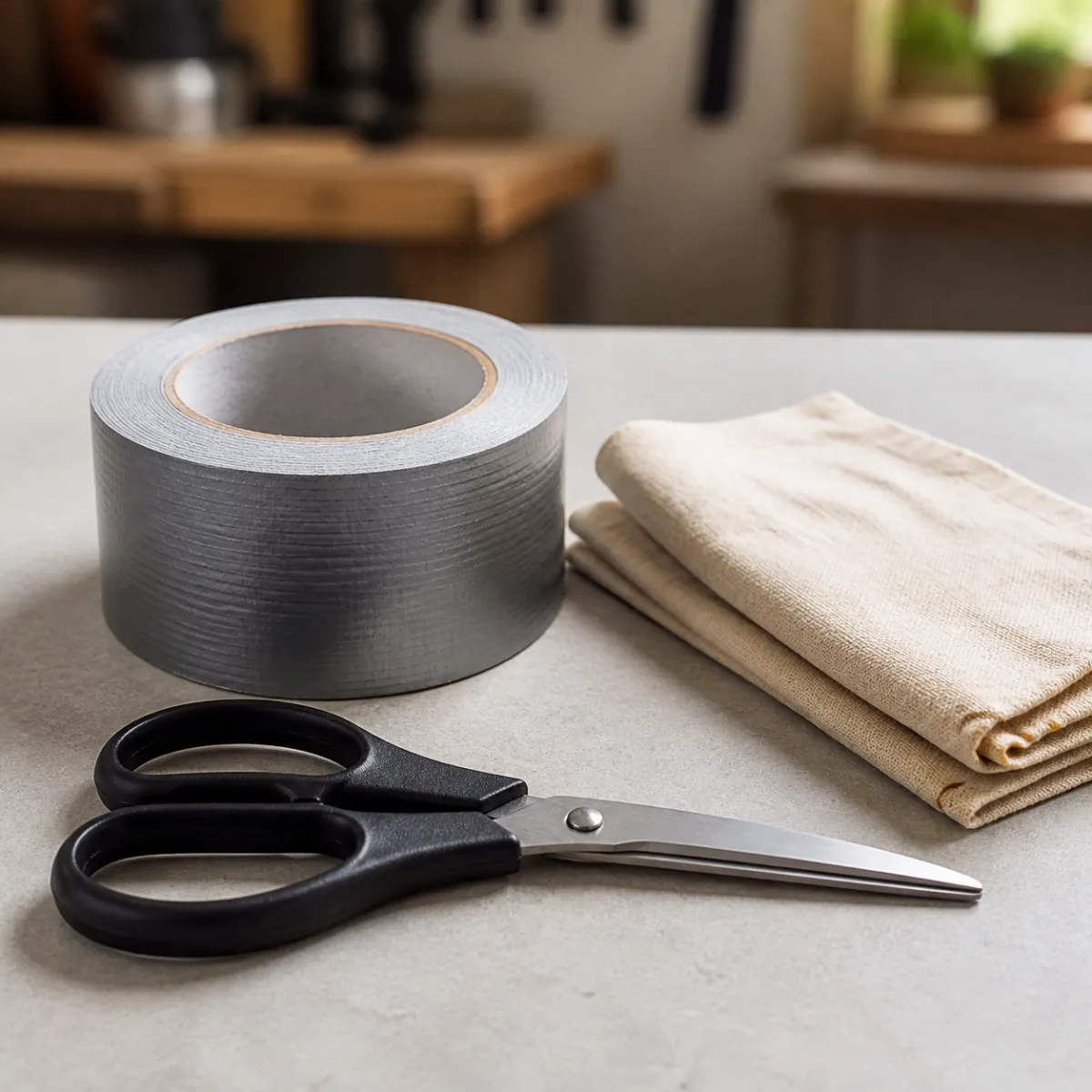
Ordinary duct tape is cloth mesh, thin film and rubber-based glue, built for short-term indoor work. Water wicks into the exposed cloth edge, sun bakes the film brittle, and the glue creeps under load until the whole thing slides off the joint. No wicking edge and no thin glue line: that's the difference between a fix lasting a season and one lasting an afternoon.